Friday, 29 April 2016

Engaging The Viewer

Engaging the viewer is very important when making a story, because if the viewer isn't engaged or interested it could result in the viewer turning off the film.

Certain shots will have been filmed in order to maximise the sensory experience for the viewer. This can be achieved through:

  • Wide shots which present a panorama of a setting or communicate the scale of an action spectacle
  • Aerial shots which follow action while taking in an entire geography
  • Crane shots which can scale buildings
  • Bullet time camera-setups which allow the viewer to experience a moment of action frozen in the time from 360 degrees.
Variation of shot distance and camera angles, audiences enjoy and expect variations of shot distances and camera angles. Varying editorial pace can engage the audience because it will keep the suspense up when their is a scene with action occurring. 

Audiences like to feel changes in the shape of editorial pacing
  • Changing pace - speeding up or slowing down editorial pace can create tension (depending on the context)
  • Long takes can also be used to create a sense of naturalism (real time passing) - which can engage an audience by giving the sense of being immersed in a real life situation.  


Shot Variation

Shot variation is a technique used in filmmaking to achieve the most effective coverage of an entire sequence of action. Shots used include wide shots, extreme long shot, long shot, medium shot, medium close shot, close-shot, close up and extreme close up.
These are the different shot variations:
  • Wide/Long Shot
  • Establishing Shot and Master Shot
  • Full Shot
  • Medium Shot
  • Close Up
  • Extreme Close Up
  • Insert Shots
  • Reaction shot


Wide/Long Shot is used for:
·         Sets the tone of the scene;
·         It introduces the location;
·         Enable the audience to understand the concept of the scene.
·         Long shots are used to present a new location.

Medium Shot is used for:
·          Medium shots are commonly used to show the dynamic of two or three person interaction.

Close Up is used for:
  •  Intensity
  •  Intimacy
  •  Detail

Shot variation is used a lot in action films when a fast paced scene is being shot. In addition to a high number of cuts in a short space of time the variation of shots and dynamism also helps to fasten the pace of the scene.


Thursday, 28 April 2016

Storytelling

Storytelling is the conveying of events in words, sound or images. Stories have been shared by human beings for tens of thousands of years as a means of recording and representing the word and for the purposes of:

  • Entertainment
  • Education
  • Cultural preservation
  • Instilling moral values
Crucial elements of stories and storytelling include:
  • Plot
  • Characters
  • Narrative
  • Point of view
The term 'storytelling' is used in a narrow sense to refer specifically to oral storytelling and in a looser sense to refer to narrative technique in other media.

Visual Storytelling

The phrase "visual storytelling" applies to film and a range of other media. Sometimes it carries perspective edge: in a pictorial medium, you should tell your stories visually - rather than a lengthy piece of dialogue, in other words its more effective to show instead of  telling. 

Visual storytelling refers to the way that producers of moving image products of moving image products convey the meaning of action and events through images without recourse to the written or spoken word. 

This is achieved through two techniques:
  • The choice of shots
  • The way those  shots are edited together. 
Visual storytelling is purely visual. In film, it needs concepts, music, noises and much of the time a modicum of  dialogue to work most fully. A director who invests in "purely visual" passages first and then considers how his/her images might be reinforced by other inputs, gains huge dividends in the long run.


Film and Video

The word analog or analogue recording comes from the Greek, ana “according to” and logo “relationship”.


An analog or analogue signal is a continuous signal for which the time varying feature of the signal is a representation of some other time varying quantity. For example in an analogue audio signal, the instantaneous voltage of the waves. 


Digital signal differs, in which continuous quantity is a representation of a sequence of discrete values (ones and zeros). The term analogue signal usually refers to electrical signals. 


Analogue is continuous whereas digital is broken down.

Analogue recording is a technique used for the recording of analogue signals which, among many possibilities, allows analogue audio and analogue video for later playback.

Analogue recording methods store signals as a continuous signal in or on the media. The signal may be stored as a physical texture on a phonograph record. This is different from digital recording which digital signals are represented as discrete numbers.

Film can be a chemical or digital process.
When it is a chemical process a light sensitive silver halide emulsion coated on a film base is exposed to light in a camera. This creates a latended image which is made visible by emerging the film into a chemical solution which we refer to as a ‘developer’.


A movie projector is an opto-mechanical device for displaying motion picture film by projecting it onto a screen.

Digital doesn’t require chemicals. Digital images are captured using photo sensors and these images are then processed by specialised software. Prints can be made through a traditional projection or film can remain digital form for digital projection.

Analogue is referred to chemical photography to contrast with the digital process. Analogue is referring a signal whose output is proportional to the input. 

Wednesday, 27 April 2016

Development of Drama

The development of drama is all based on the conflict and external conflict of what is happening within the story and what to drive the story forward.

External Conflict

Encounters between a protagonist who has a dramatic need in the scene and an antagonist, who opposes that need in the scene. When things come to a head the editor will often rely on the editorial technique of shot-reverse-shot to move back and fourth between the two characters. Showing the audience a character close-up will immerse the viewer in the growing emotion in that the character; at the same time, the viewer will be anticipating the reaction of the off-screen agent in the exchange.

Characters enjoy the suspense in all its various forms and they like to be teased and challenged.

  • Withholding a characters identity at a key moment challenges an audience to make intelligent guesses.
  • Cutting away from a scene invites the audience to imagine how the action in the first scene might be continuing. 
Internal Conflict

When a protagonist is involved in a battle with him or herself, a feeling two opposing needs occur and this is when internal conflict arises. 

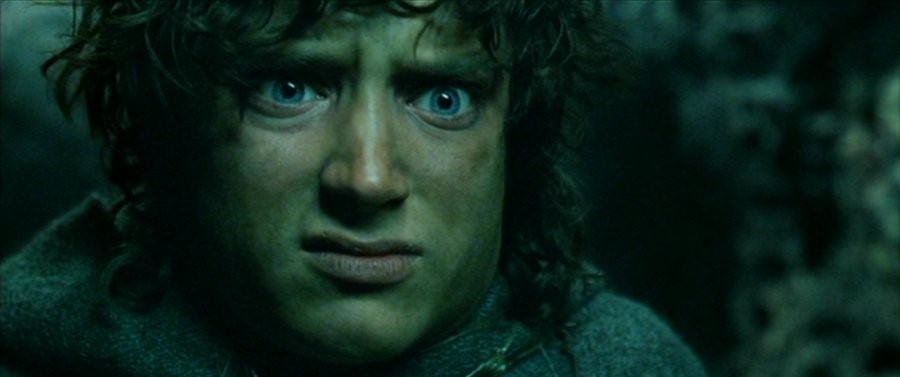
The editor may favour close coverage to capture this internal struggle. Shots will be selected which focuses on eyes and mouth to show feelings of discomfort, unease, tension or on other bodily parts such as hands, feet to show signs of strain and tension, in hope that the viewer will feel the same struggle.

The Dramatic Context

An editor needs to make sure that the current scene relates to what came before it and what comes after it. 

The editor must also decide whether the level of tension/suspense in successive scenes needs to be maintained or whether relief of some kind such has a comedic tone needs to be introduced. Dramatically effective narratives achieve a variety and balance in the way events are structured. Tension without relief becomes uninteresting. 

Subtext 

An editor can sometimes create subtext through the way shots are assembled for example, a character might be saying one thing, but according to what the editor chooses to show the audience might be led to understand something other than what is being expressed verbally. 

Key Dramatic Beats

The editor can indicate progression towards key dramatic beats in the narrative by cutting from wide coverage of action to close coverage of that action. 

The most obvious example of this is a 2 person dialogue, the editor cuts from a medium, such as a two shot of both characters, to individual close ups (using the shot reverse shot technique). This can add emotion build-up in the exchange and increase dramatic effectiveness to the scene.



Tuesday, 26 April 2016

Relationship To Genre

Sequences of shots in a scene are assembled by an editor will often be determined by the genre, for example in a drama, an editor may begin with a wide shot, focusing on proxemics which is the distance between two people who have become emotionally estranged from one another.

If the dramatic beat of the scene has been determined as the most explosive moment in an ensuing argument, the editor will often work towards this by using a medium coverage, through which an audience can experience the building tension that the characters themselves are feeling.

In an action adventure film, the editor may need to keep altering between wider shots of the action and closer coverage detailing the responses/reactions of characters. In a chase scene for example, a range of wide production value shots will often intercut with closer coverage of the characters involved responding to the changing strategy, dynamics and stakes of the chase.

In a horror film, a director might elect to stay wide on the action to isolate a vulnerable character. The editor might use a long take, resisting the option of cutting to a new angle, lingering on the action in the same shot size in order to create a sense of stillness. Relationship to the genre is clear through the conventions used within the genre.

Cross - Cutting and Parallel editing

Cross – cutting refers to the editorial technique of cutting between different sets of action that can be occurring simultaneously or at different times.

Cross – cutting is often used to build suspense, by cutting away at a point of heightened tension in the action so as to leave an audience wondering what happened next.

Parallel editing is an editing technique that allows two or more simultaneous sets of action to unfold within a single film sequence.

Parallel editing:
  • Creates tension
  • Can show multiple points of view
  • Can create dramatic irony when the characters are unaware of events unfolding away from the main action.


Both cross – cutting and parallel editing are used to imply a relationship between different sets of action.

What distinguishes cross – cutting and parallel editing


An editor can cross-cut to shots from different time periods, but the term parallel editing is used to show two separate events scenes happening simultaneously.